Chai, Frameworks, and a Garden in Karachi: How Culture Scales a Business From the Inside Out

Welcome to my newsletter. This is where I drop my epiphanies from conversations, lived experience, and rabbit holing (aka research). This is not polished scientific jargon, drawn-out case studies on best-in-class business frameworks, MF stakeholder value, and quick money-generation ideas. This will be my opinions with humour and a focus on a better life for the next 7 generations as a whole.
The plan is to bring you one honest idea/take/thought at a time, grounded in real-life economy experience, in the hope that something in here makes your next decision a little cleaner, a little easier, and your business a little less likely to quietly fall apart while you are busy looking the other way.
This is what we need for future generations… you not to fail!
Today, that idea starts with a garden, a pot of chai, and a business unit that no one thought was worth the investment.
The Garden Was Not a Perk. It Was the Operating System.
The office was a house. The lawn had a few chairs. Every afternoon, whoever was in town would end up outside: senior managers straight off a flight, field personnel coming back from the rig, local staff who had been grinding through the day. Someone would order chai. Sometimes a cigarette. Sometimes samosas. Sometimes biryani. Sometimes a hookah. No agenda. No formal debrief. Just people talking after a long day, and looking to destress in a place of comfort and safety.
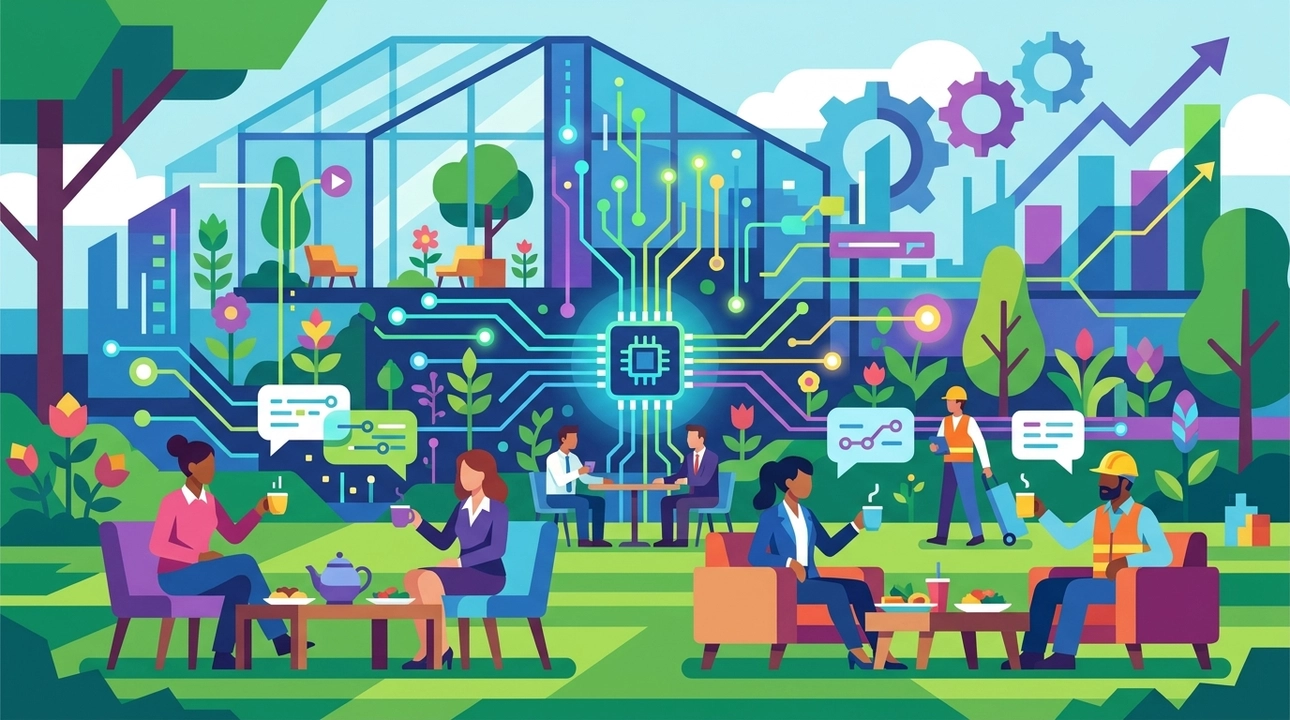
That sounds small. It was not small.
What was happening in that garden was the work that never shows up in a slide deck but determines everything about whether a team can actually deliver and scale. People were dropping their guard. They were talking about the day, their families, what was frustrating them, what they needed, and life in general. And in doing that, they were building the connective tissue that makes a business function under pressure.
This is what culture actually is. Not a set of values on a wall. Not a team-building retreat. Culture is the daily practice of choosing how people treat each other, and it compounds. One meal. One cup of tea. One conversation where someone feels like they belong. Over months and years, those moments become the reason people show up early, stay late, pick up the phone when things go sideways, and trust each other enough to solve hard problems fast.
The growth that followed, a team that went from a handful of support staff to thirty+ full-time employees, a new office in the fancy new skyscraper, a business unit that expanded across multiple product lines, contracts that ran into the hundreds of millions, none of it was accidental. It was the direct output of a culture that had been built intentionally, one chai session at a time.
Systems Follow Culture. Not the Other Way Around.
Here is where most businesses looking to scale get it backwards and stumble into the ethersphere. They build the org chart, the KPIs, the reporting structure, and then wonder why no one is actually using any of it. The systems land, but they do not stick because there is no culture beneath them to make them meaningful.

Culture is the reason someone follows a process when no one is watching. It is why a field engineer flags a problem before it becomes a crisis: they trust that raising it will not get them punished. It is why a cross-functional team actually shares detailed information: the people in it have broken bread together and know each other as human beings, not just job titles.
Once that foundation existed in Karachi, the systems could do what systems are supposed to do: create leverage. Standard operating procedures, SLAs, KPIs, project management structures, all of it worked because the team already had a shared language and a shared set of expectations. When things went wrong, and they always do, the response was faster and more coordinated because people were not wasting energy on politics or self-protection. They were just solving the problem.
That is the sequence: culture first, systems second, scale third. Try to skip the first step, and the second step becomes busywork, and the third step becomes a slow bleed.
Growing the Ecosystem, Not Just the Business Unit
There is one more layer to this, and it is the one most operators miss when they think about scaling. Growth that occurs only within your own walls is fragile. Growth that pulls an entire ecosystem up with it is durable.

In Karachi, the relationships that drove the most significant business outcomes were not purely transactional. They included clients who trusted that a problem raised on a Friday afternoon would have a solution by Saturday morning. They included competitors who were willing to talk openly, share context, and collaborate on growing the overall market rather than just fighting with a 'fixed pie' mentality. They included people across departments and product lines who had never met in person, but knew they could send an email saying, "We have a negotiation coming up, can you help?"
That network did not happen because of a CRM system or a business development strategy. It happened because the approach to people, both inside and outside the organization, was consistent. Hospitality was not a tactic. It was a value. Generosity with time, knowledge, and credit was not a performance. It was how the work actually got done.
When a client sees a team that is genuinely invested in their success, not just their own revenue targets, the relationship changes. When a competitor sees that there is no scarcity mindset driving every interaction, the dynamic changes. When the entire ecosystem starts to believe that the rising tide is real and that there is enough for everyone to grow, new business follows naturally. It does not need to be chased.
Pakistan became one of the top six business units in the region not because of the size of its reserves or the scale of its infrastructure. It got there because of what was built between people, and because of a willingness to grow the whole ecosystem rather than just protect a corner of it.
The Chai Is Still the Point
Here is the takeaway: the most sophisticated operational framework in the world cannot outperform a team that trusts each other, believes in what they are building, and knows that when things go wrong, someone will show up and not run.

Culture is not soft. It is the hardest thing to build and the most expensive thing to lose. Systems are not bureaucracy. They are what allow a culture to survive at scale, when the team triples in size and the original group that built the thing is spread too thin to carry it alone.
And the ecosystem, the clients, the collaborators, even the competitors, they are not external to the business. They are part of it. Scale done right pulls everyone up. That is the only kind of scale worth building toward.
The garden in Karachi is gone. The lesson from it is not. Get your culture right. Build systems that serve it. Then get shit done at a scale that makes the whole ecosystem better.
The chai has been replaced with cortados, the garden with cafes and walks. Reach out and let's build together.
Toodles for now, and see you in the next one.