Leo McGarry Ran the White House. Here Is What That Teaches Us About the Chief of Staff Role.

Every founder and CEO I have ever worked with shares one common problem. They are running the vision and the machine at the same time, and one of those things is going to suffer. Usually it is the vision.
That is not a character flaw. That is a structural problem. And the fix is not a better calendar app. It is a person, the right person, sitting between the leader and the complexity.
The Chief of Staff role does exactly that. It is not a glorified executive assistant. It is not a junior COO. It is the person who holds the organizational culture together while the CEO focuses on the decisions that only the CEO can make. When it works, the whole machine gets quieter, faster, and harder to break.
I have been thinking about this role a lot lately, partly because I am exploring it as an extension of my own practice alongside the COO work I already do. And the clearest illustration of the role done right is not from a business school case study. It is from a TV show.
Leo McGarry, Chief of Staff on The West Wing, is the most useful model of this archetype I have come across. Not because the White House looks like your startup or your SMB, but because the leadership challenges are identical. High-performing, strong-willed people. A visionary leader who needs protection from the noise. A culture that can either be built deliberately or left to collapse under pressure.
Leo chose to build it deliberately. Here is how.
The Open Door Is Not a Policy. It Is a Signal.
Leo ran what I would call a zero-latency culture. Bad news had to reach him fast, and people had to know that bringing it to him was safe. He kept his door open. Senior staff could walk in. If there was a problem, he wanted to hear it before it became a crisis.

I ran the same system when I was managing field crews, engineers, and sales teams. One meeting a week. My door was always open; knock and come in. If it was closed, text me with context. For anything urgent, come find me immediately. And because I moved between desks rather than staying planted in my office, people saw me working alongside them, which kept the distance between leadership and execution short.
The other thing I kept open was my office itself. If a team member needed a room for a hard conversation or a quick crisis huddle, I would move. Literally get up and give them the space. That sounds small, but it communicates something important: your work matters more than my comfort.
The underlying principle is that access to leadership has to be frictionless when something is going wrong. A Chief of Staff who is hard to reach is a bottleneck pretending to be a resource.
Taking the Blame Is Not Weakness. It Is Infrastructure.
Leo McGarry had a habit that made him exceptional: when his people made mistakes, he absorbed the consequences before they reached the Oval Office. He gave his team public credit and took private blame. Over time, that built something money cannot buy, which is genuine loyalty.
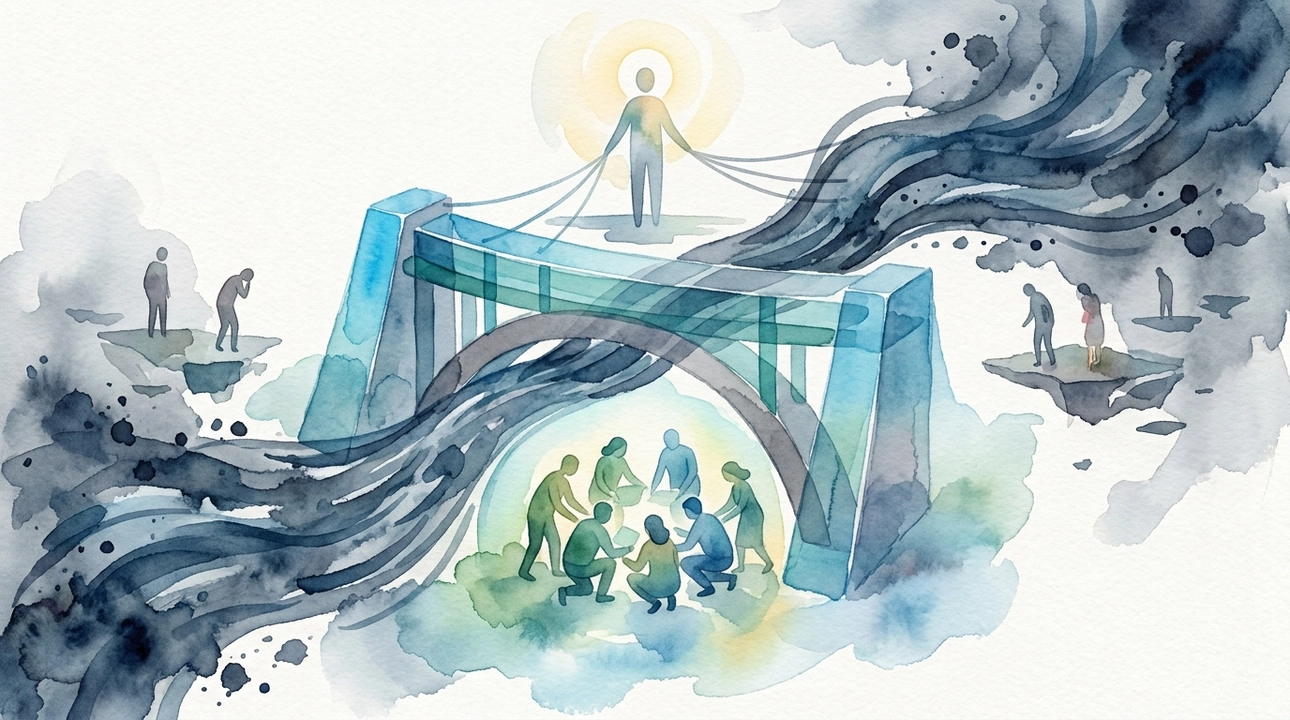
I adopted that same approach early in my career, and I held to a simple rule with my teams: I should be the first to know when something goes wrong. Not so I can panic, but so I can protect you. If you tell me before it becomes visible, I can manage it. If it surfaces above my head before I know about it, neither of us looks good.
The moment a leader starts passing blame downward, trust evaporates. Fast. People stop surfacing problems. They start managing optics instead of outcomes. And then Murphy's Law does what it always does: something goes wrong at the worst possible moment, in front of the most important people, because no one wanted to be the one who said something first.
The Chief of Staff has to be the person who makes speaking up feel safe. That is not soft leadership. That is how you build the kind of culture where problems get caught early.
The Frameworks That Keep a High-Performing Room From Flying Apart
Leo did not just rely on good instincts and an open door. He ran repeatable systems that kept a complicated organization from becoming chaotic.

The most important one was the daily senior staff meeting. Everyone surfaced their priorities and issues out loud, so nothing stayed siloed and Leo always had visibility before problems reached the president. It was not a long meeting. It was a structured information exchange that gave leadership a full picture every single day.
He also maintained a strict gatekeeping framework around the president's time and attention. His job was to decide what actually needed presidential input and what senior staff could handle themselves. That sounds obvious, but it is rarely done well. Most leaders get flooded with decisions that should never have reached them, because no one at the next level down had the authority or the clarity to resolve them.
The third system was escalation discipline. People knew what threshold of problem warranted going straight to Leo versus handling it themselves. That kept the whole operation from bottlenecking through one person, while still ensuring the right issues got escalated at the right time.
I ran a version of this with my one-meeting-a-week rule. One structured touchpoint for everything that needed group visibility. Everything else: come to me directly if it is urgent, handle it yourself if it is not. Clear thresholds, clear channels, and a leader whose attention is not scattered across a hundred small decisions every day.
Culture Is Sometimes an Uncomfortable Conversation
One of my clearest memories of applying these principles came from a project I worked on in Saudi Arabia. I had an engineer on the team who was technically sharp, probably sharper than most people around him. But he was not gelling with the group. He came to me and asked how he could build the relationships he saw others building, how he could get more comfortable, how he could find his footing.
I told him the truth, even though it was not easy to hear. In that environment, relationships came before results. The informal moments, the ones he had been skipping because they did not interest him, were where trust was actually built. I told him he needed to show up to those moments even when he did not want to be there. Not to perform, just to be present. To listen more than he spoke. To understand that his credentials and technical ability were not going to open doors the way a genuine relationship would.
He was not thrilled with the advice. But he took it. And over time, the dynamic shifted.
A Chief of Staff has to be willing to have those conversations. Not the comfortable coaching sessions where you validate what someone is already doing, but the ones where you tell a talented person that the problem is not their skills, it is their approach. That is a form of respect. It says: I think you are worth the hard truth.
Why Leaders Actually Need This Role
The CEO or founder is responsible for the vision. That is not a part-time job. The moment they get pulled into managing internal dynamics, resolving conflicts between senior staff, or catching problems that should have been caught two levels below them, the vision starts to drift.

The Chief of Staff role exists to prevent that drift. It is the person who keeps the culture aligned with the vision while the leader focuses on what only the leader can do. It is the person who runs the information systems, holds the escalation frameworks, takes the blame when necessary, and coaches the team through the friction that comes with growth.
Leo McGarry did all of that in a high-stakes, high-visibility environment, and he did it without needing the spotlight. That is the job. Influence without authority, built entirely on trust, clarity, and the willingness to show up for the hard moments.
If your organization is growing and you are finding that the complexity is eating the vision, that is not a strategy problem. That is a structural one. And the answer might not be a new process or a better tool.
It might be the right person in the right chair, keeping the machine running while you focus on where it is going.