The Ecosystem Responds: How Showing Up Without Keeping Score Builds an Innovation Hub

In 2011, I got an email from a warehouse manager in India named Silvan. He didn't know me. He'd just been told by someone in the company's supply chain: "Drop Hassan an email. He'll help you out." So he did. He needed a chemical shipment for his business unit to execute a high profile job for a client in India, and he was in a jam. He wanted to see if I could help him out from my inventory....I ran my risk analysis, verified my buffers, and said yes. One conversation. Maybe thirty minutes of my time.
Five years later, Silvan and I were working side by side at corporate headquarters in Dubai, optimizing the supply chain for chemicals, materials and spares for a multi-billion dollar market pressure pumping market in Asia, from Egypt to New Zealand. He taught me supply chain at a depth I wouldn't have found anywhere else. He introduced me to people I would have never met. Fifteen years on, we still catch up. That one email, from a stranger asking for help, compounded in ways I couldn't have predicted or planned for.
That's the thing about social capital. It doesn't show up on a balance sheet. It doesn't fit neatly into a pitch deck. But it is the actual substrate beneath every ecosystem that works.
One Visionary Screaming in a Field
Chris Neuman returned to BC in 2021 and saw a gap. “Vancouver’s a very unique startup ecosystem in that it is the most fragmented ecosystem that I know of in the whole world,” Neumann told BetaKit. “It’s one of the only ecosystems that doesn’t have a nexus for startup activity.” (https://betakit.com/bc-founders-day-changes-venues-as-it-looks-to-continue-growth/)
Founders in British Columbia had ambition and real problems, but they didn't have a dedicated space to talk honestly with each other. Not a mixer, not a conference built for sponsors. A room designed for people who are building, where they could hear from others who'd already been through it, learn from the hard parts, and find the support they actually needed.
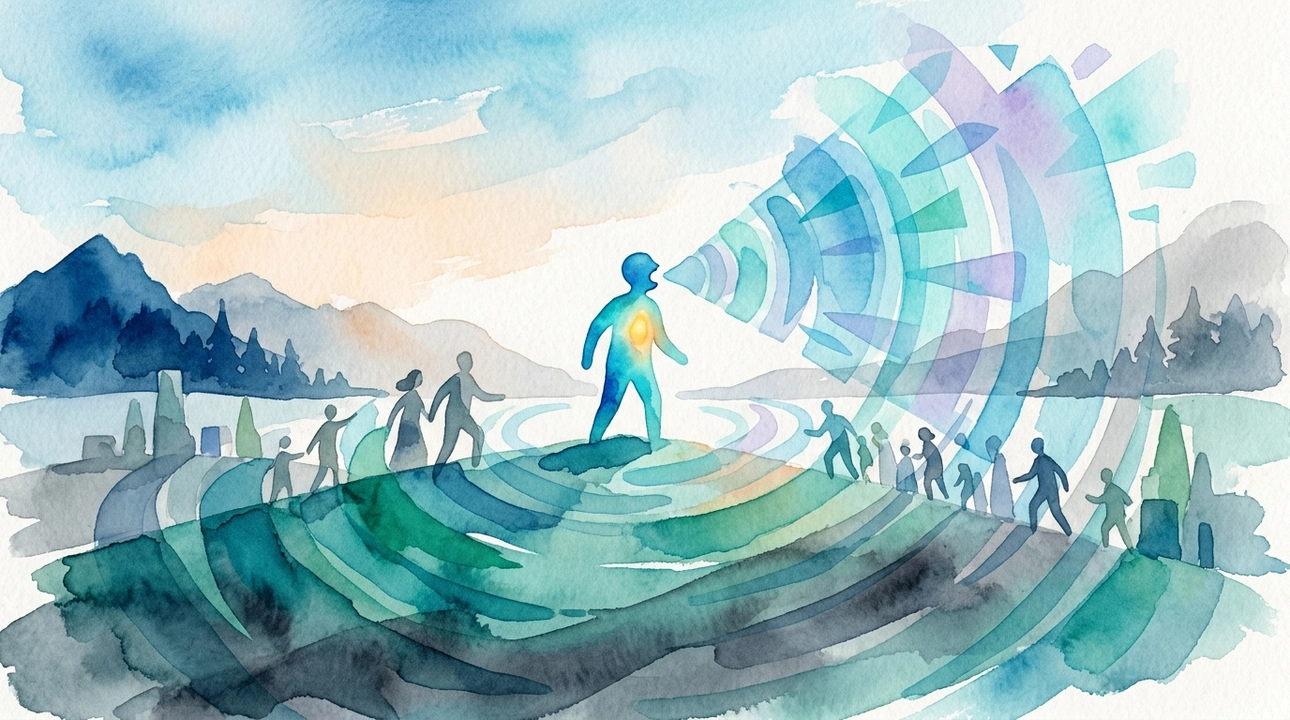
So he built Founder's Day. The first one he did in 2024, he reached out to the community showed up. He did it again in 2025, and damn...a lot more showed up. Now, it's a shit ton of people and a brand new location. 500 to 750+ participants and in 2026 hopefully in 3 digits. The event, for me, kept expanding not because of a marketing but because the need was real and the culture around it was working.
There's a line I keep coming back to: every movement starts with one visionary screaming in the middle of a field. The vision isn't the hard part. The hard part is whether anyone else shows up to listen.
You Can't Buy the Connective Tissue
Chris Hobbs showed up. Not because Chris Neuman hired him. Because Hobbs had been around. He'd been mentoring founders at InnovationUBC, investing time in people who were still figuring things out, building real relationships across the community. When he saw what Neuman was doing, he didn't calculate the ROI. He just decided to help. He took on the volunteer coordination for this year's event: sourcing people, writing the orientation handbook, running the logistics.
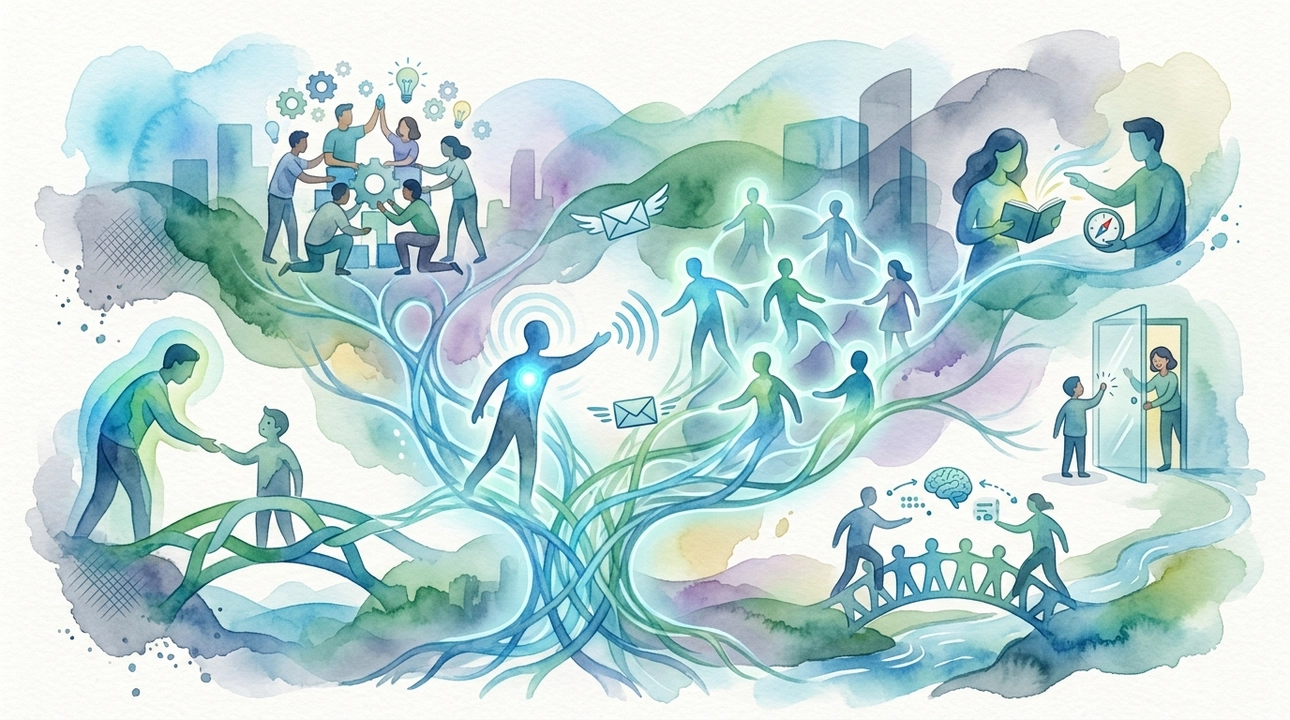
And when Hobbs hit a constraint, when he needed more volunteers because life had happened to the people who'd originally committed, he reached out. And within roughly twenty-four hours, the gap was filled. Not because he sent a job posting. Because he'd built a community of people who already trusted him and wanted to see the event succeed.
I only knew to respond because I'd seen Hobbs show up for others. We'd mentored the same founders. We'd crossed paths enough times that the relationship was real, not transactional. When someone like that reaches out, you don't ask what's in it for you. You just find a way.
Robert Putnam wrote about this in Bowling Alone (https://en.wikipedia.org/wiki/Bowling_Alone). His research showed that communities with strong social capital, the associations, the civic participation, the habit of showing up for each other, outperformed communities that lacked it, even when those communities had comparable resources. Policy, capital, educated talent: all necessary. But without the associations, without the actual human connective tissue, the ecosystem doesn't hold.
That's what was happening in real time at Founder's Day. That's what had happened with Silvan in 2011. That's what happened when the guy I'd never met knocked on my glass office door in Pakistan 2017, told me a colleague in Dubai had sent him my way, and said he needed help navigating a client problem. I didn't know him. I helped him anyway. We shared knowledge, he connected me to people and information I didn't have, and somehow the whole operation got smarter because of a conversation that had no transactional logic behind it.
Ecosystems Are Not Built. They Are Earned.
Vancouver has the pieces. The talent, the university infrastructure, the capital starting to move, the policy conversations happening. What determines whether it becomes a genuine innovation hub rather than a city with a few interesting startups is whether the people in it keep showing up for each other without keeping score.
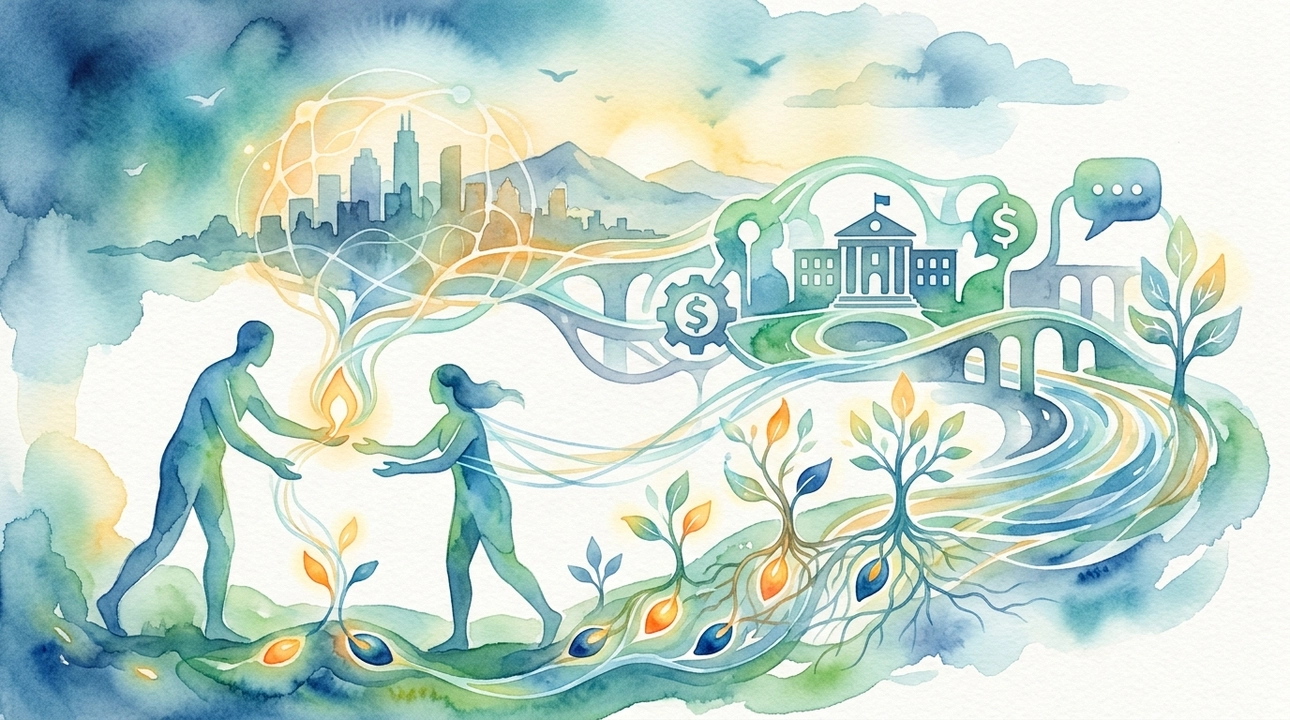
That sounds soft. It isn't. It's actually the hardest operational variable to build and the easiest to lose. You can replace a bad process. You can raise more capital. You cannot manufacture trust that was never deposited.
Every time someone shows up to mentor a founder they'll never invoice, every time a volunteer coordinator fills a gap because the community already believed in what was being built, every time someone says yes to a cold email from a stranger in a jam, that's a deposit. Small, invisible, unremarkable in the moment. But it compounds. It compounds in ways that don't show up until years later, when the person you helped is the one teaching you, or the ecosystem you invested in is the one opening doors you didn't know existed.
I think about the progression of what Chris Neuman started. One event. One founder-first vision, no big sponsorship machine behind it. And then Chris Hobbs sees it and says, "I want to help." And then the volunteer roster fills in twenty-four hours. That's not luck. That's what happens when you build the culture before you need it.
What This Has to Do With Scaling a Business
If you're running an SMB or a Series A startup and you're wondering what any of this has to do with your growth problem, here's the direct answer: your business is also an ecosystem. The question of whether your team shows up for each other, whether your operators share knowledge across functions, whether your culture rewards helping over hoarding, is the same question. The giver or taker as per Adam Grant (https://adamgrant.net/book/give-and-take/)
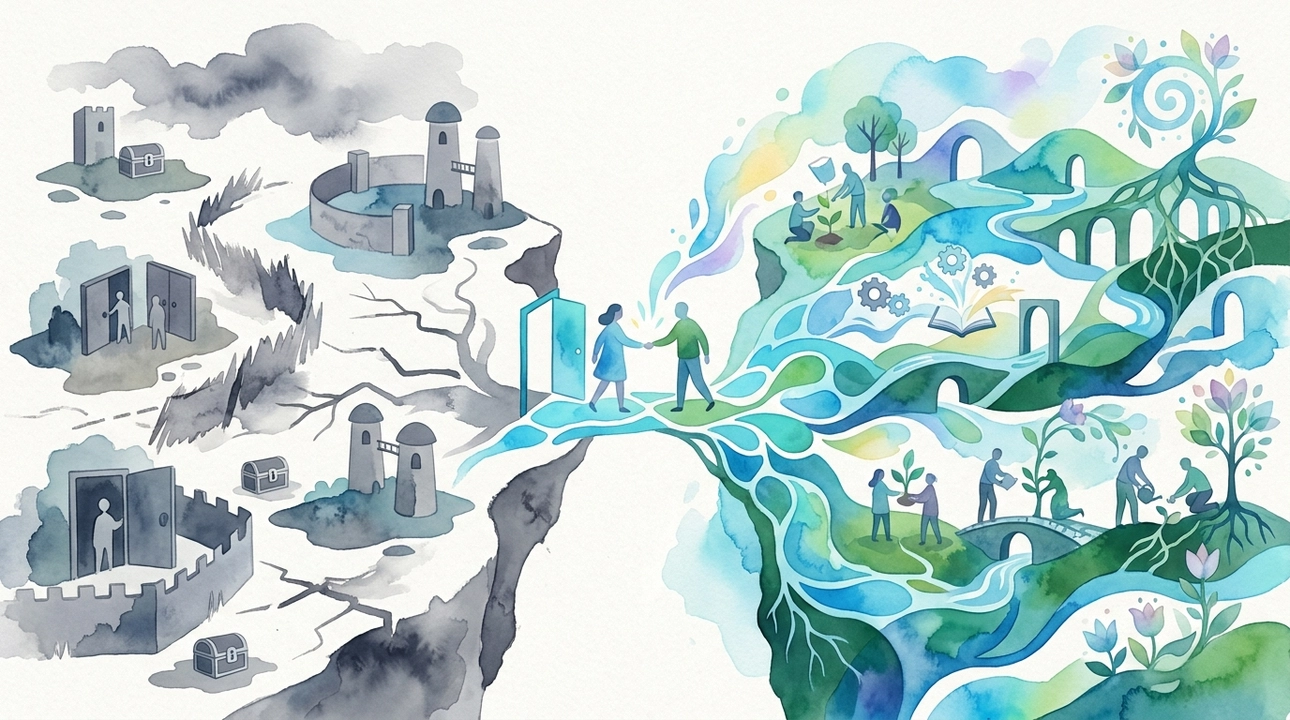
The businesses I've seen struggle at the growth inflection point aren't usually struggling because the market turned or the product broke. They're struggling because the internal ecosystem became extractive. People protecting territory. Information siloed. Leaders keeping score. The compounding stopped.
The antidote is the same whether you're talking about a startup, a supply chain team, or a city trying to become a hub for innovation. You have to build the habit of showing up before you need people to show up for you. You have to be the kind of operator who opens the door when someone knocks, who says yes to the cold email, who volunteers when the gap appears.
Not because it's altruistic. Because that's what makes the ecosystem respond when you need it to.
Silvan and I still catch up. Not because there's a contract that requires it. Because somewhere back in 2011, two people chose to be useful to each other, and that turned out to be worth more than either of us could have budgeted for at the time.
That's the operating principle. Show up. Open the door. Don't keep score. The rest compounds on its own.